
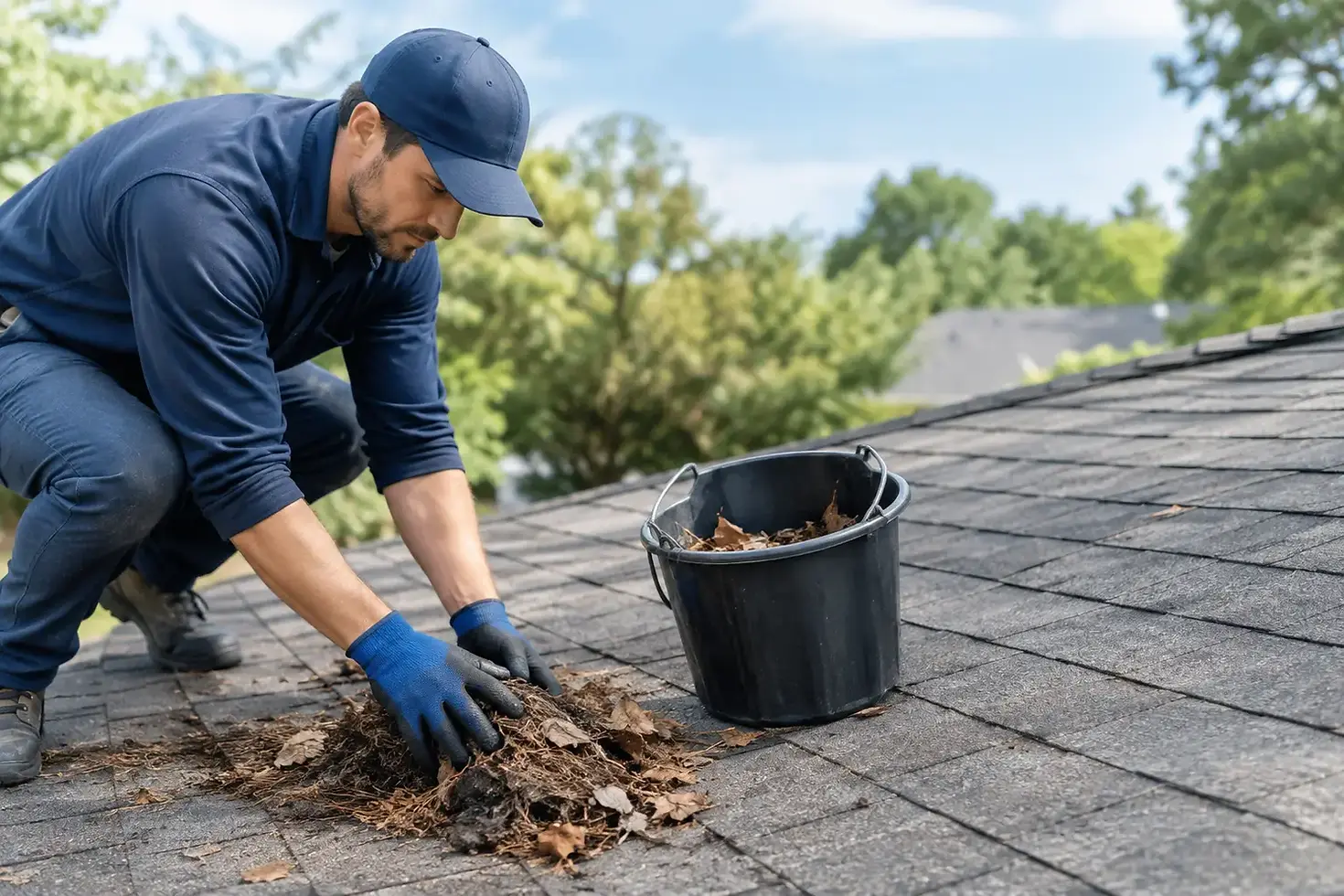
When a Roof Debris Removal Service Is Worth It

Leaves tucked beneath shingles, pine needles packed into roof valleys, and branches resting against flashing may look like minor housekeeping issues. On the South Carolina coast, they can hold moisture against the roof surface, slow drainage during heavy rain, and conceal conditions that deserve attention. A professional roof debris removal service is a practical form of preventive maintenance for homeowners, commercial property owners, HOAs, and managers who want to protect the roof system before a small issue becomes a repair.
Roof debris is not always obvious from the ground. A roof can appear clear from a driveway while its valleys, transitions, drains, gutters, and areas behind chimneys are collecting material. For properties exposed to coastal wind, mature trees, and seasonal storms, regular attention can help preserve both roof performance and the value of the building beneath it.
Why Roof Debris Creates More Than a Mess
A roof is designed to shed water. Debris interferes with that basic job. When leaves, needles, seed pods, and small limbs collect in a valley or behind a roof penetration, rainwater can move more slowly or pool where it should drain freely. That prolonged contact with moisture can accelerate deterioration of roofing materials, underlayment, flashing details, and fasteners.
The risk is especially relevant in Pawleys Island and surrounding coastal communities. Humid conditions can keep debris damp for long periods, while salt and brackish-air exposure can contribute to corrosion on vulnerable metal components. A pile of wet leaves against a metal flashing detail or standing-seam panel does not automatically mean the roof is failing, but it creates an environment where problems can develop faster.
Debris can also mask early warning signs. A lifted shingle, a cracked boot around a pipe, deteriorated sealant, or a branch abrasion may not be visible until the material is cleared away. By that point, water may already have found a path into the roof assembly.
When a Roof Debris Removal Service Makes Sense
Not every roof needs a scheduled cleanup at the same frequency. An open, low-slope building with little tree cover has different maintenance needs than a home surrounded by pines and live oaks. The right plan depends on the roof design, nearby vegetation, drainage layout, roof material, building use, and exposure to wind-driven rain.
A professional roof debris removal service is often worthwhile after a named storm, a prolonged period of high wind, or seasonal leaf drop. It is also a sound choice when you see debris collecting in valleys, gutters overflowing during rain, branches touching the roof, or staining near eaves and exterior walls. For commercial buildings and multifamily properties, cleanup may be part of a broader maintenance schedule designed to reduce disruptions and document the roof's condition over time.
Property owners should be especially cautious when the roof is steep, high, aging, wet, or constructed with materials that can be damaged by improper foot traffic. Walking in the wrong location can crack tiles, scuff protective coatings, loosen granules on shingles, or compromise seams and flashing. The goal is not simply to make the roof look clean. It is to remove material without creating new damage.
Warning Signs That Should Prompt an Inspection
Some conditions call for more than debris removal alone. If you notice interior water spots, peeling paint near a ceiling, musty odors, visible sagging, loose shingles, bent metal, or granules collecting below downspouts, the roof should be evaluated for an active problem.
The same is true when debris has built up around a chimney, skylight, roof-to-wall transition, or drain. These are detail-heavy areas where water management depends on properly installed flashing and clear drainage paths. Clearing the surface is helpful, but an experienced roofer should assess whether trapped moisture has affected the surrounding materials.
What Professional Debris Removal Should Include
A responsible service begins with access and safety planning. That means considering roof pitch, material type, weather conditions, equipment needs, landscaping, parking areas, and the people using the property. For an occupied storefront, restaurant, church, or multifamily community, work should be scheduled with attention to entrances, customer traffic, and daily operations.
The cleanup itself should address loose debris from roof surfaces, valleys, drainage paths, and other areas where material has collected. Gutters and downspouts may also need attention if they are part of the drainage issue. On flat and low-slope commercial roofs, special care is needed around drains, scuppers, penetrations, and membrane seams, where standing water can become a more immediate concern.
Just as valuable is the visual review that happens during the service. A contractor can identify exposed fasteners, damaged flashing, deteriorated sealant, algae or moss conditions, branch contact, and signs of corrosion. A debris-removal visit is not a substitute for a detailed inspection when a leak is suspected, but it can reveal issues that should be addressed before the next hard rain.
At Butler Roof Company, debris removal can be coordinated with preventive maintenance and roof-condition evaluations, giving property owners a clearer picture of what needs attention now and what can be planned for later.
The Difference Between Cleanup and Roof Repair
Removing debris solves the immediate obstruction. It does not repair damaged shingles, aged pipe boots, failed flashing, punctured membranes, or worn waterproofing. A good contractor will be clear about that distinction rather than treating cleanup as a cure for every roof concern.
For example, clearing a roof valley may restore water flow, but it will not correct a valley lining that has deteriorated. Removing branches can prevent more abrasion, but it will not reverse damage caused by repeated rubbing during wind events. Likewise, cleaning a low-slope roof drain is useful, but recurring ponding may point to a drainage design issue, blocked internal components, or a membrane condition that requires further investigation.
This is where property-specific recommendations matter. A newer GAF shingle roof may only need debris cleared and nearby limbs trimmed back. An older coastal metal roof may warrant closer attention to fasteners and corrosion-prone areas. A commercial flat roof with repeated drainage concerns may need a maintenance plan that includes scheduled clearing and periodic inspection.
Why DIY Cleanup Can Carry Risk
For a single-story home with a safely accessible gutter line, a homeowner may be able to handle minor ground-level maintenance. Roof-surface cleanup is different. Falls are the obvious concern, but they are not the only one. Using a leaf blower incorrectly can push debris beneath shingles or into roof vents. Aggressive raking can remove protective granules. Pressure washing can strip coatings, force water under roofing materials, and shorten the service life of certain systems.
Improper cleanup also creates liability concerns for commercial and HOA-managed properties. A dropped tool, falling branch, or poorly controlled debris can damage vehicles, landscaping, signage, and neighboring property. Professional crews use the appropriate access methods, protect surrounding areas, and understand where roofing materials are most vulnerable.
There is also the question of disposal. Storm debris and accumulated organic material need to be collected and removed responsibly, rather than left to wash into drainage areas or collect around the foundation. For larger properties, organized cleanup helps keep common areas presentable while reducing avoidable maintenance issues.
Build Debris Removal Into a Coastal Maintenance Plan
The best time to think about roof debris is before water appears on a ceiling. For many coastal properties, an annual review is a reasonable starting point, with additional service after major storms or when seasonal conditions create heavy buildup. Homes with dense tree cover may need more frequent attention. Buildings with flat roofs, internal drains, or high public use may benefit from a more defined maintenance schedule.
A maintenance plan should also account for the source of the debris. Trees do not always need to be removed, but limbs should be evaluated when they touch the roof, hang over vulnerable areas, or create a repeated buildup pattern. Keeping branches properly managed reduces abrasion, limits leaf accumulation, and can help minimize storm-related impact.
Quality starts at the top, but long-term roof protection also depends on what is allowed to remain there. If debris is collecting on your roof or drainage areas, a timely professional evaluation can help keep a manageable maintenance need from becoming an unexpected repair.


Comments