
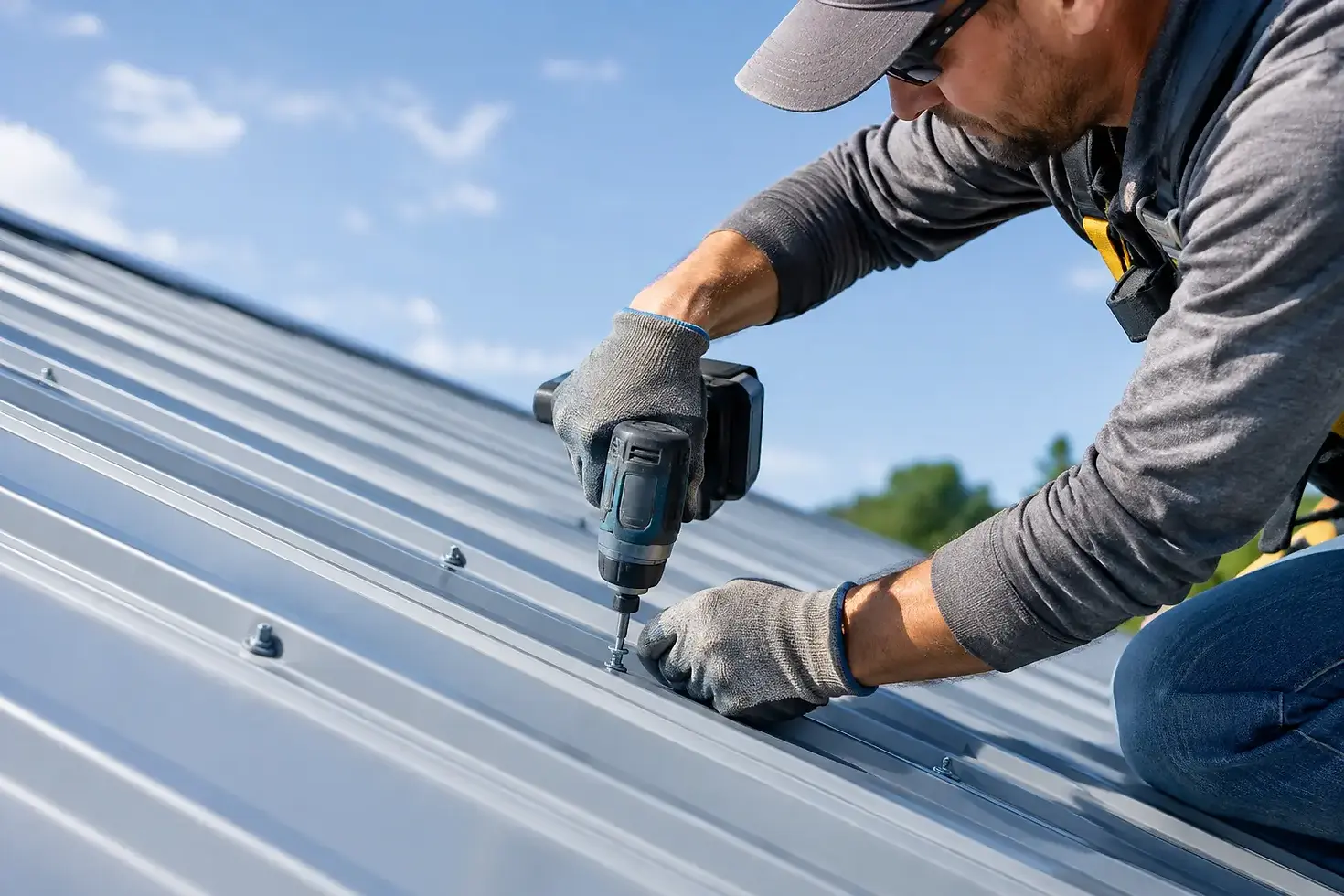
Exposed Fastener Metal Roof Repair That Lasts

A leak in an exposed-fastener metal roof rarely starts as a dramatic opening. More often, water works past a weathered screw washer, a loosened fastener, or a flashing detail that has shifted over time. Effective exposed fastener metal roof repair begins by finding that precise entry point instead of covering the symptom with sealant and hoping for the best.
For homes, metal buildings, churches, restaurants, and rental properties along the South Carolina coast, the repair approach matters. Salt air, wind-driven rain, high humidity, and changing temperatures can accelerate wear at fasteners and panel laps. A prompt, properly scoped repair can protect the building interior and extend the useful life of a metal roof. A shortcut can allow hidden moisture damage to continue beneath the panels.
Why Exposed-Fastener Metal Roofs Develop Leaks
Exposed-fastener systems use screws driven through the metal panel and into the roof framing or substrate. Each screw has a sealing washer, typically made from EPDM rubber, intended to keep water out while allowing the panel to remain securely attached. This is a proven, practical roofing system, but its performance depends on thousands of individual fastening points remaining properly installed and maintained.
Over time, the washers can dry, crack, flatten, or lose their ability to seal. Screws may back out slightly as panels expand and contract. Some fasteners are driven too tightly during installation, squeezing the washer beyond its effective range; others may be underdriven or installed at an angle. Any of these conditions can create a path for water.
Leaks can also originate away from the field of screws. Common trouble areas include ridge caps, sidewall and headwall flashing, pipe penetrations, valleys, eaves, end laps, skylights, and transitions where the metal roof meets another material. Water may enter at one detail and travel along framing before becoming visible on a ceiling. That is why the stain inside the building is not always directly below the actual roof defect.
The Most Common Exposed Fastener Metal Roof Repair Needs
Failed or Backed-Out Fasteners
A screw that sits proud of the panel by even a small amount may no longer compress its washer against the metal. Rust around screw heads, missing screws, and washers that appear split or flattened are also warning signs. The correct repair may involve replacing individual fasteners with properly sized, long-life screws and new sealing washers.
Simply tightening every screw is not always the answer. If a screw hole has become enlarged or the underlying wood has deteriorated, the fastener may not hold. In those cases, a contractor may need to use an appropriately sized replacement fastener, address damaged decking or framing, or evaluate whether a larger repair area is warranted.
Corrosion at Panels and Flashings
Surface discoloration is not always structural corrosion, but rust deserves close attention in a coastal environment. Salt and brackish-water exposure can affect fasteners, panel cut edges, flashing, and areas where incompatible metals contact one another. Corrosion can weaken a panel, compromise a fastener opening, and make a small leak much more difficult to repair reliably.
The repair plan depends on the extent of the damage. Light surface corrosion may be cleaned and treated as part of a maintenance program. Perforated panels, severely corroded flashing, or widespread deterioration may require replacement of affected sections. A responsible recommendation should distinguish between a repair that is likely to perform and a temporary measure that only delays a larger decision.
Failed Sealant and Closure Details
Sealant is useful at specific roof details, but it is not a substitute for sound metalwork. At ridge caps, end laps, pipe boots, and flashing transitions, aged sealant can shrink, separate, or lose adhesion. Foam closure strips may also deteriorate or be missing, allowing wind-driven rain, insects, and debris beneath cap sections.
A lasting repair includes cleaning and preparing the area, replacing failed closure materials where needed, securing the metal correctly, and applying compatible sealant only where the system calls for it. Smearing roof cement across panels may appear to stop water briefly, but it can trap moisture, interfere with drainage, and complicate future repairs.
Damaged Panels After Wind or Impact
Coastal storms can loosen ridge caps, lift panel edges, deform flashing, or damage panels with falling limbs and windblown debris. Dents alone do not always create a leak, but damage near a seam, fastener line, or panel overlap should be inspected. A displaced panel can change how water sheds across the roof and put stress on surrounding fasteners.
For insurance-related damage, clear documentation is valuable. Photos, condition notes, and a professional evaluation can help property owners understand whether the issue is limited to a repairable area or affects the roof system more broadly.
How a Professional Repair Should Be Diagnosed
A reliable repair starts with an inspection of the whole drainage path, not just the place where water appeared indoors. The roof should be checked for loose or corroded fasteners, damaged panels, failed sealant, flashing defects, open laps, penetration details, debris accumulation, and signs of ponding or restricted drainage.
Inside the building, the inspection may include attic spaces, ceiling stains, wet insulation, framing discoloration, and areas near HVAC equipment or plumbing penetrations. On commercial and multifamily properties, a leak investigation should consider the building’s use and schedule. A repair above an occupied restaurant, office, or tenant space may require careful coordination to protect operations and keep disruption low.
When the source is uncertain, diagnosis may take more than one visit or involve controlled water testing. That extra care is often worthwhile. Repairing the wrong detail can create false confidence while water continues to enter elsewhere.
When Repair Makes Sense and When Replacement May Be Smarter
Many exposed-fastener roofs can be repaired successfully, particularly when damage is isolated and the panels remain structurally sound. Replacing failing fasteners, renewing flashings, correcting penetrations, and replacing a limited number of damaged panels can be a cost-effective way to preserve the roof.
Replacement becomes a more practical conversation when leaks are recurring across multiple areas, corrosion is widespread, fastener holes are failing throughout the roof, or the panel system has reached the end of its expected service life. The same is true when prior patching has created a collection of incompatible materials and unreliable details.
A roof coating may be discussed for some metal roofs, but it is not automatically the right answer. Coatings require thorough surface preparation and should not be used to conceal failed panels, loose fasteners, or unresolved flashing problems. The roof condition, coastal exposure, drainage, and future maintenance needs all affect whether a coating, repair, or replacement offers the best value.
Coastal Maintenance Protects the Repair
On Pawleys Island and throughout the surrounding coastal market, routine attention can prevent a small repair need from becoming interior damage. Roofs near salt water benefit from periodic inspections, especially after major storms. Keeping valleys, gutters, and panel laps clear of leaves and debris supports drainage and helps identify corrosion before it spreads.
Property owners should avoid walking on metal panels unless necessary and should be cautious about attaching equipment, holiday decorations, or temporary structures through the roof. New penetrations and improperly placed screws are frequent sources of avoidable leaks. If a new vent, satellite dish, or mechanical component is planned, the roof detail should be evaluated before work begins.
For larger properties, an organized maintenance plan can be especially helpful. Churches, HOAs, multifamily communities, and commercial owners often benefit from documented inspections, prioritized repair recommendations, and scheduling that supports budgeting rather than reacting to every leak as an emergency.
Choose a Repair That Addresses the Cause
Exposed-fastener metal roof repair is not just about replacing a screw or applying sealant. It is about understanding how the panels, fasteners, flashings, and drainage details work together under coastal weather conditions. Butler Roof Company evaluates the condition of the roof system and recommends work that fits the property, the source of the problem, and the expected service life of the materials.
If you see rust around fasteners, staining on ceilings, lifted flashing, or loose metal after a storm, arrange an inspection before the next period of heavy rain. A well-diagnosed repair can be a straightforward investment in keeping water where it belongs: outside your building.


Comments